
There’s a point where effort stops turning into results, no matter how hard your team pushes.
Most companies hit it with all the right pieces already in place: good people, real capability, valuable customers. The pieces aren’t the problem. What’s missing is the system that converts them, a system that determines whether what your company already has converts into what your customers need.
This is the Performance Ecosystem.
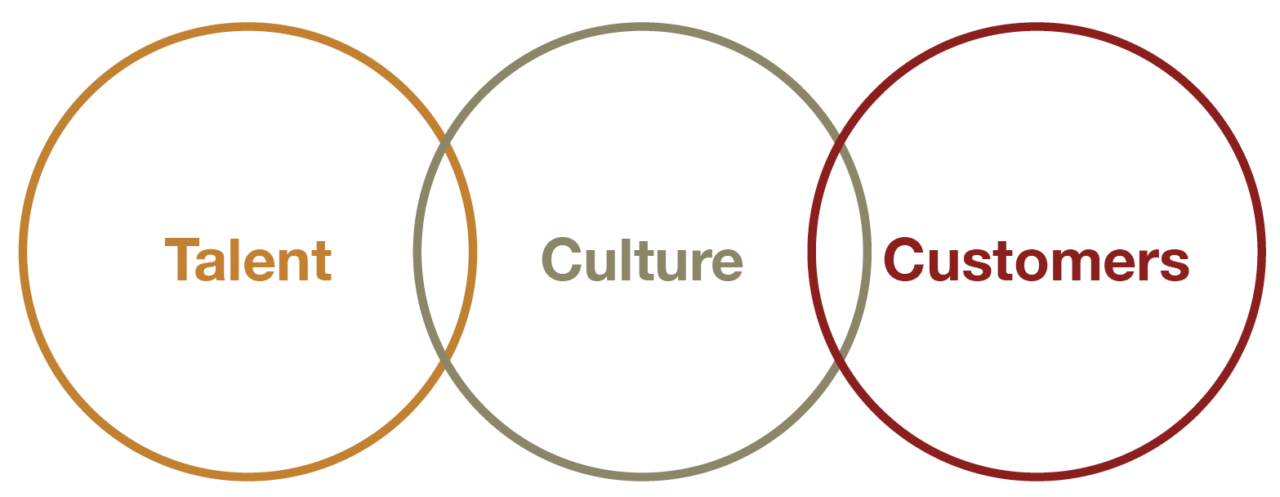
You already talk about talent, culture, and customers. Every leader does. It comes up in nearly every planning conversation you have.
That’s not rare. It’s the default vocabulary of running a company.
What’s rare is running them as one system instead of three separate conversations.
You know the feeling: a decision that should take five minutes still has to go through you. A plan that looked solid in the leadership meeting stalls somewhere on its way to execution. A customer who seemed fine right up until the moment they weren’t.
Those aren’t three separate problems. They’re the same problem, showing up in three places.
Look at your company as an ecosystem instead of three departments, and the constraint on your growth becomes clear: whether the three are converting into each other, or working in isolation.
Fix one zone alone, and growth doesn’t move as well. You’re still growing, but it’s grinding: friction on every deal, every hire, every quarter that should have been easier than it was.
Now picture what changes when all three zones work interdependently, as one system.
Talent converts into capacity, not more hours. When the people around you take on real ownership, more of what’s currently on your desk moves to theirs, and the company can do more without needing to be bigger to do it.
Culture means good ideas stop being diminished through the handoff between departments. What gets proposed in one meeting shows up in the next, sharper for having passed through more people.
Customers stop being a source of risk to manage and become the surest signal of what to build next. Innovation gets more focused, more customized, shaped by what customers are already showing you.
More capacity. Sharper thinking. True innovation. All of it becomes possible because of where these three zones meet: Talent and Culture create purpose, Culture and Customers create promise, Talent and Customers create positioning, each one stronger for how the others feed it.
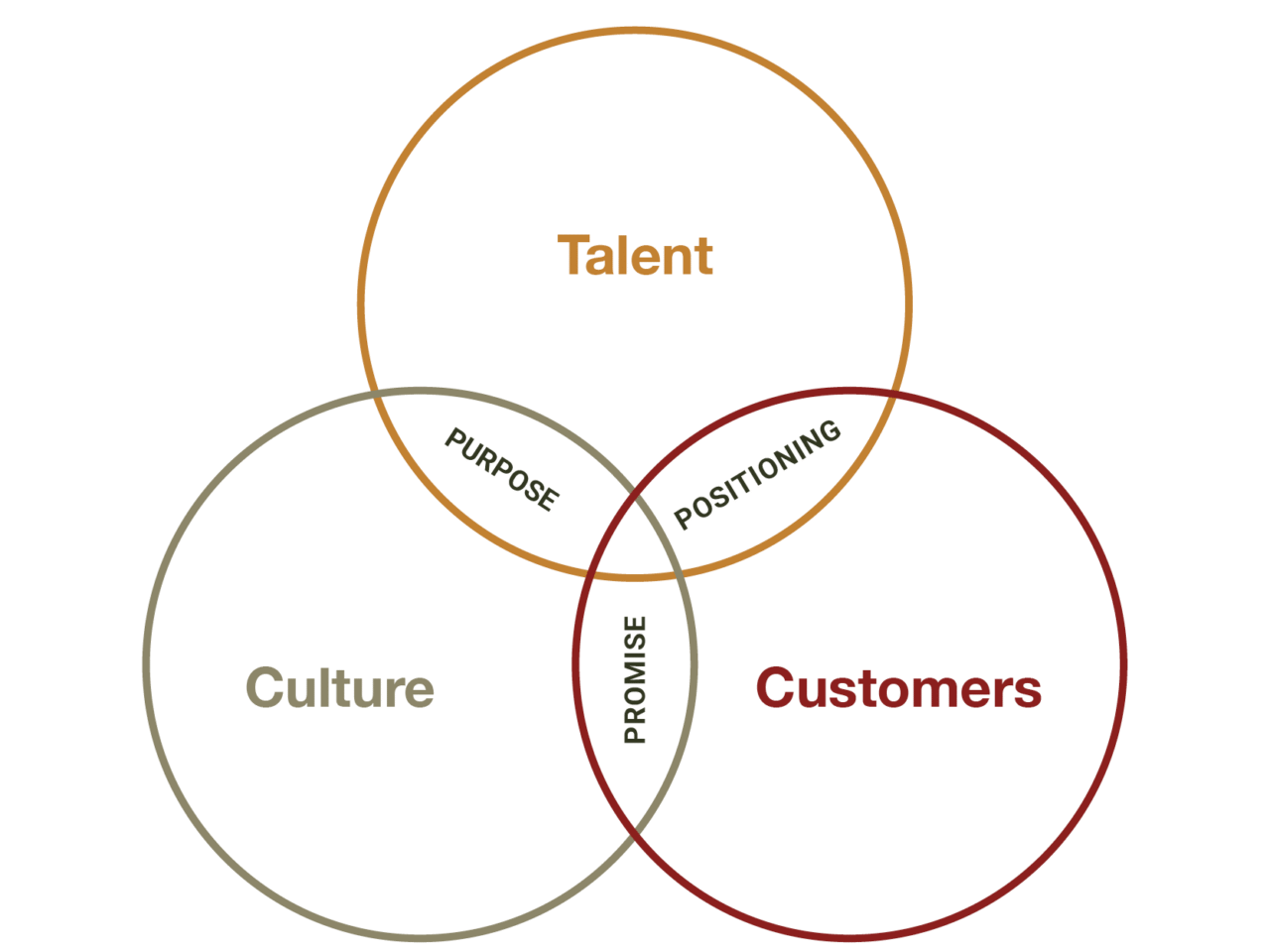
That’s not hypothetical. It’s already possible, once these three zones work as one system.
Already possible is one thing. Creating the conditions for it is what leadership does best. Here’s how:
Leaders govern conditions. Conditions govern conversion. Conversion governs growth.
Govern conditions well, and conversion starts working like a flywheel: once it’s turning, it keeps turning, without you pushing on execution or stepping in personally every time something starts spinning its wheel.
Push on growth directly, and you’ll still get it. It’ll just keep costing what it’s always cost: grinding, earning every point of it the hard way. That’s growth in these conditions, and it can be bought with pressure.
Govern conditions instead, and something shifts: growth stops draining the people producing it and starts building their capacity instead. The conditions get stronger, not more strained.
That’s Better Growth: growth that builds your company’s capacity to keep growing, instead of spending it down. The Performance Ecosystem is the system that produces it, and it’s held up under two decades of real disruption.
While most companies are still managing Talent, Culture, and Customers as three separate conversations, yours could be running as one system. That’s where the real competitive advantage is: converting what you already have faster than any company still managing the pieces separately.
The Performance Alignment Session is where that starts: four hours, and your leadership team leaves with one shared plan, the constraint that’s been holding it back named, and the moves that start the flywheel turning.
For some leaders, that’s enough on its own. For others, it becomes Thrive: the new way the business runs on Better Growth, quarter after quarter.
One conversation is enough to see exactly where the constraint is.
Most growth companies become more capable than they become effective. The Performance Ecosystem is an original framework developed by David Edward of Strategic Initiatives Group to close that gap: converting the company’s capability into the results it should already be producing. It identifies three interdependent zones: Talent, the capacity zone; Culture, the conversion mechanism; and Customers, the demand zone. Together they are governed by a single cascade: Leaders govern the conditions. Conditions govern conversion. Conversion governs growth. When the system works, the gap between what the company is capable of and what it is producing begins to close. That is Better Growth.
Learn more at sigunlimited.com.